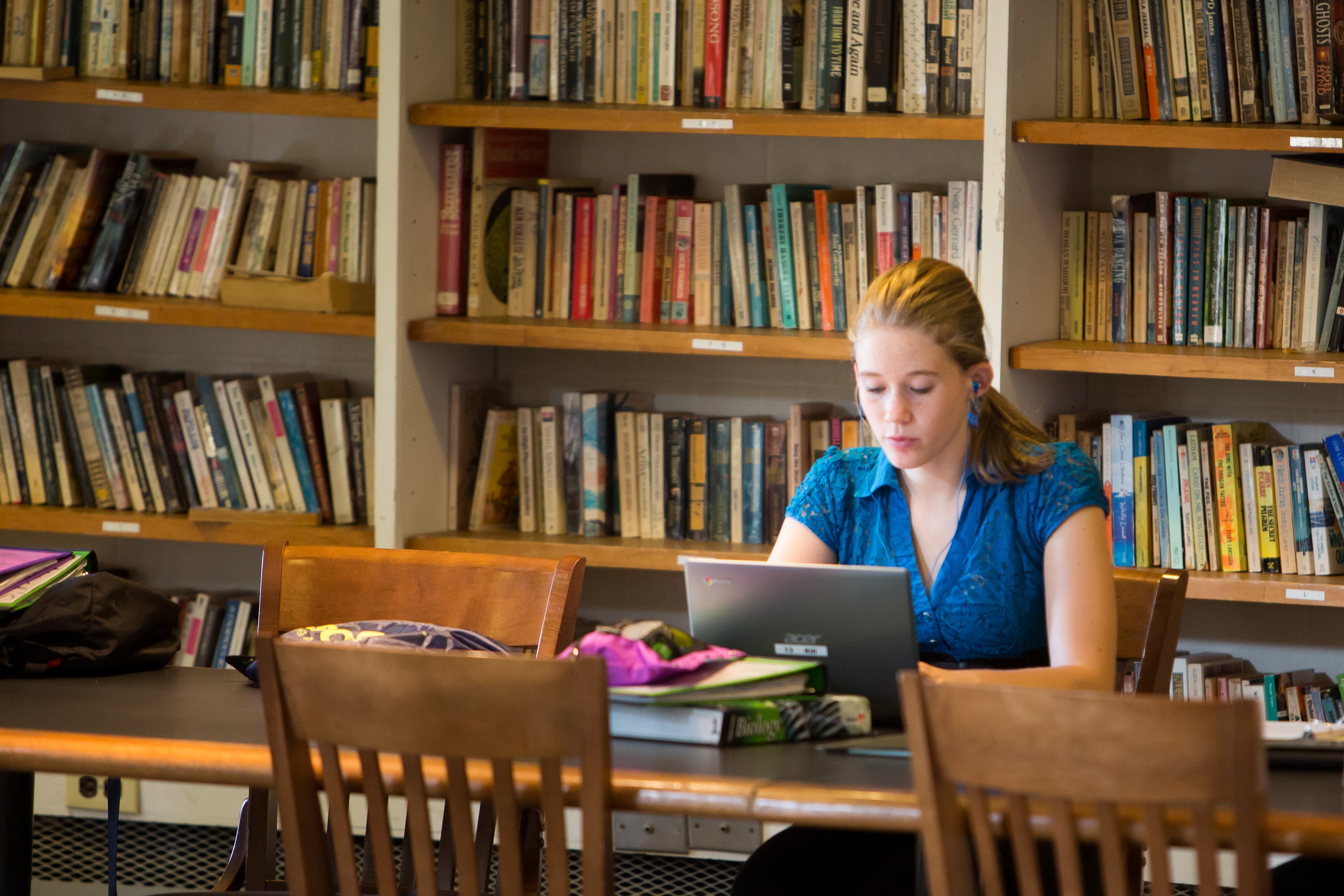
Rock Point offers a solid academic foundation built on clear expectations, personalized support, and intentional challenge. Within that structure, students have room to explore interests, pursue independent projects, and choose how they demonstrate their learning, thereby building confidence, ownership, and a sense of possibility.
At Rock Point, we emphasize the importance of learning and practicing Transferable Skills—the skills that will apply to a variety of settings after high school. Our curriculum is based on the skill areas of Organization, Communication, Critical Thinking, and Community Engagement. Throughout all of our classes, the lessons and activities students engage in are rooted in strengthening skills in these areas.
Rock Point students attend the following classes in core groups (usually organized by grade): English, Math, History, Science, and Art. These classes meet once a day for 45 minutes, though we also run extended classes and engage in learning experiences that might run for a whole morning.
In addition to the core courses, electives courses are offered three mornings per week. Students can choose from a variety of creative electives, or pursue an independent learning project or online course.
Empower student learning
Across the curriculum, our emphasis is on teaching students how to learn and challenging them in personalized, developmentally appropriate ways. Robust subjects taught by expert teachers provide the academic depth and mastery students need, while also serving as the vehicle for building essential skills like critical thinking, communication, problem solving, and academic confidence so that students and their growth remain at the center of every learning experience.
With small classes averaging 4-10 students, teachers come to know students well, and engage them at an appropriate level of challenge. Students become more aware of their own educational needs and interests while developing the skills to advocate for themselves and form strong working relationships with peers and teachers. As a result, two students might work together to make a podcast commenting on a historical event for their assignment, while another student’s assignment might be a traditional research paper about that same event.
The goal is not for every student to learn or demonstrate their learning in exactly the same way. It is to help each student find approaches that are meaningful, challenging, and effective for them.